
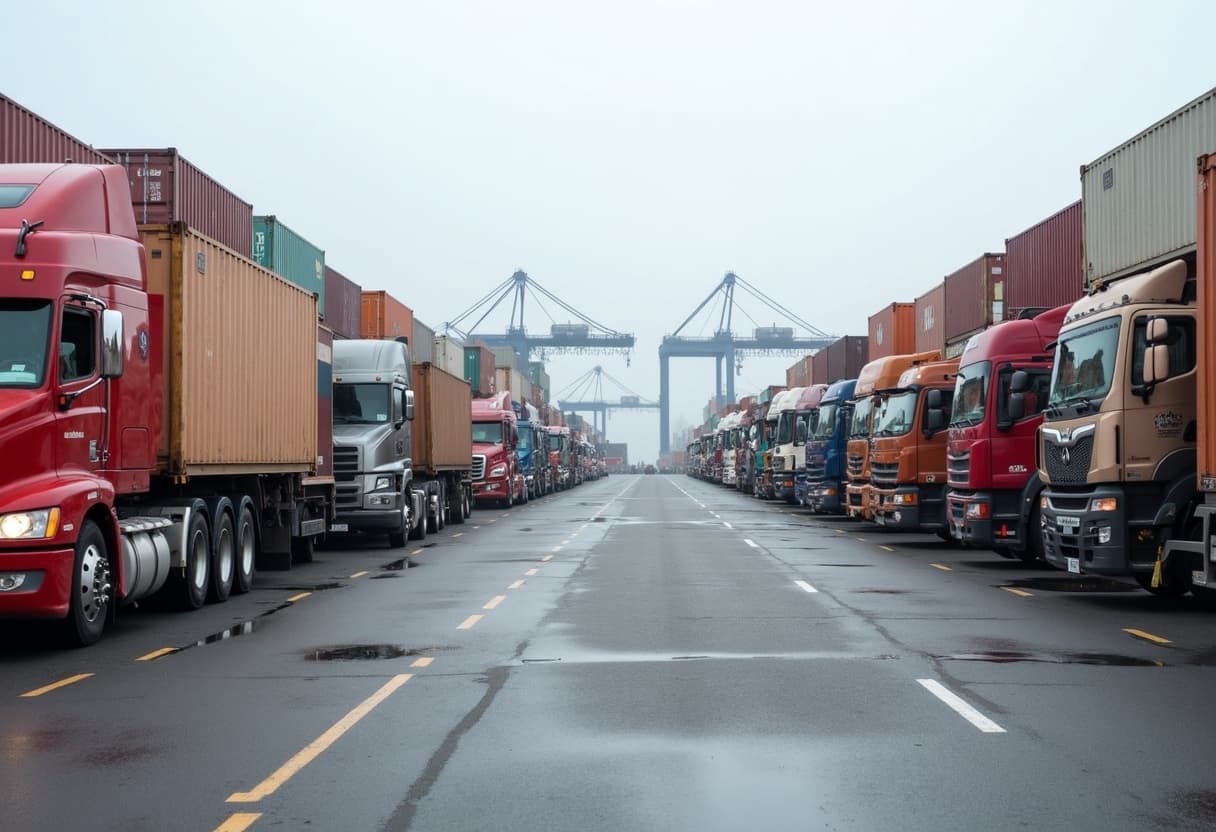
What Is Drayage? A Complete Guide for Seattle Shippers
If a shipping container arrives at the Port of Seattle or the Port of Tacoma, it does not teleport to your warehouse. Something has to move it from the terminal to your dock door. That short-distance truck move — usually under 50 miles — is called drayage. It is one of the most important and least understood links in the supply chain.
Drayage meaning, in plain terms
The word "drayage" comes from the old English "dray," a low cart used to haul heavy goods short distances. The modern version is functionally the same idea: a truck carries a container a short distance between a port, rail terminal, or distribution hub and its next destination. The drayage definition used by the Intermodal Association of North America is "the trucking of containerized freight to and from ports, rail terminals, and inland distribution centers."
Think of it as the bridge between ocean or rail transport and ground delivery. Without drayage, containers would stack up at the terminal with no way to reach the businesses waiting for them.
How drayage works at Pacific Northwest ports
When a vessel berths at Terminal 46 in Seattle or the Washington United Terminals in Tacoma, containers are offloaded into the port's container yard. From there, a drayage carrier picks up the container using a tractor and chassis, hauls it through the terminal gates, and delivers it to a warehouse or distribution center — often in Kent, Auburn, Sumner, or Fife, where much of the region's logistics infrastructure sits.
The typical drayage process looks like this:
- Container discharge — the shipping line offloads your container at the terminal.
- Availability notification — the terminal releases the container for pickup.
- Chassis assignment — a chassis is paired with the container for road transport.
- Gate out — the drayage trucker picks up the container and exits the terminal.
- Delivery — the container is hauled to the receiving facility and unloaded.
- Empty return — the empty container and chassis are returned to the port or depot.
Each step has its own window. Miss a pickup window at the terminal and your container can incur demurrage charges — daily storage fees that add up fast.
Types of drayage
Not every drayage move is the same. The industry recognizes several categories based on where the container is going and why:
- Pier drayage — moving a container from a rail terminal to a port for ocean export.
- Inter-terminal drayage — moving containers between terminals within the same port complex.
- Door-to-door drayage — picking up a container at the port and delivering it directly to the consignee's facility.
- Shuttle drayage — moving containers to a temporary staging lot when port yards are full.
For most importers in the Seattle and Tacoma area, door-to-door drayage is the most common. You have a container arriving at the port and you need it at your warehouse — that is a door-to-door drayage move.
Why drayage matters for Seattle and Tacoma shippers
The Pacific Northwest is a major import gateway. The Ports of Seattle and Tacoma together handle over 3 million TEUs (twenty-foot equivalent units) annually. Every one of those containers that needs to reach a local facility requires a drayage truck.
For shippers based in Kent, Auburn, Fife, or anywhere within roughly 50 miles of the harbors, drayage is the connection between your ocean freight and your inventory. A reliable drayage carrier means your containers clear the port on schedule, avoid demurrage, and arrive at your dock when your team is ready to unload.
The risk is when drayage capacity is tight. During peak import season — typically August through October ahead of the holidays — port congestion increases, chassis pools run short, and drayage rates spike. Shippers without a dedicated carrier relationship end up either paying premium spot rates or watching their containers sit at the terminal racking up fees.
What affects drayage cost
Drayage pricing is not a flat per-mile rate like long-haul freight. Several factors go into what you pay for a drayage move:
- Container size — 20-foot, 40-foot, and 40-foot high-cube containers have different rate structures.
- Chassis rental — if the carrier does not own chassis, you pay for a rental from the port pool.
- Port accessorial fees — terminal handling, gate fees, and clean truck program charges.
- Congestion and wait times — extended detention at the terminal can trigger hourly wait fees.
- Fuel and distance — the base rate covers a set radius; longer hauls cost more.
- Empty return — returning the empty container to the port or depot is factored into the rate.
An asset-based drayage carrier that owns its own chassis can reduce or eliminate chassis rental costs, which is a significant savings over a carrier that relies on port pool equipment.
How an asset-based fleet handles drayage
All Season Transport operates a fleet of over 50 company-owned trucks and private chassis out of the Kent, WA area, serving the Port of Seattle, Port of Tacoma, and rail terminals across Washington, Oregon, Idaho, and Montana. Because the trucks and chassis are owned — not brokered — capacity is available in-house even during peak season.
This matters because chassis availability is the single biggest bottleneck in drayage. When port pool chassis run out, containers sit. With private chassis in the yard, an asset-based carrier can pick up your container on schedule regardless of what is happening with the shared equipment pool. Our port and rail drayage service runs these moves every day from both Seattle and Tacoma terminals. For a deeper look at why owning equipment matters, see our comparison of asset-based carriers versus freight brokers.
When to book drayage
The best practice is to line up drayage capacity as soon as you have a sailing date — not when the container arrives. Carriers with their own equipment can schedule pickups in advance, which means your container moves as soon as it clears customs and is released by the terminal.
If you import through Seattle or Tacoma and want to talk through a drayage plan for your next shipment, contact All Season Transport or call 253-893-8864. You can also read more about our port and rail drayage services to see how an asset-based fleet keeps your containers moving.
FAQ
- What is drayage in shipping?
- Drayage is the short-distance truck transport of a shipping container from a port or rail terminal to a nearby warehouse, distribution center, or receiving facility. It is the first or last truck move in an intermodal shipment.
- How far does a drayage truck typically travel?
- Most drayage moves cover under 50 miles between the port terminal and the receiver's facility. Longer hauls between a port and an inland rail ramp are sometimes called intermodal drayage but still fall under the drayage category.
- How much does drayage cost at the Port of Seattle or Tacoma?
- Drayage rates at Seattle and Tacoma depend on container size, chassis rental, fuel, port congestion, and accessorial fees. A standard 40-foot container drayage move in the Puget Sound region typically ranges from $300 to $600 plus accessorials.
- What is the difference between drayage and trucking?
- Drayage is a specific type of short-haul trucking that moves containers between ports or rail terminals and nearby facilities. General trucking covers longer freight routes and may involve dry van, reefer, or flatbed trailers rather than intermodal containers.