
What Is Freight Transport? How It Works, Modes, and Costs
Freight transport is the backbone of every supply chain, yet the term gets used loosely — freight, shipping, logistics, drayage, trucking — until it is hard to tell what anyone actually means. This guide defines freight transport in plain terms, walks through the five modes, explains how a shipment actually moves from pickup to delivery, and breaks down how pricing works. If you ship goods into, out of, or around the Pacific Northwest, we will also show why the Kent Valley is one of the most efficient places in the country to run freight.
What Is Freight Transport?
Freight transport is the movement of goods in commercial quantities — pallets, containers, crates, bulk cargo — from one business location to another. The defining characteristics are:
- Cargo is palletized or containerized. Freight moves on pallets, in ocean containers, on flatbeds, or in bulk tanks — not in cardboard boxes on a conveyor belt.
- It is business to business. Freight typically flows from manufacturers and importers to warehouses, distributors, and retailers, not directly to a consumer doorstep.
- It requires specialized equipment and paperwork. Docks, trailers, chassis, bills of lading, and delivery appointments are all part of the freight world.
If a shipment is too big, too heavy, or too palletized for UPS or USPS, it is freight.
The Five Modes of Freight Transport
1. Road (Truck)
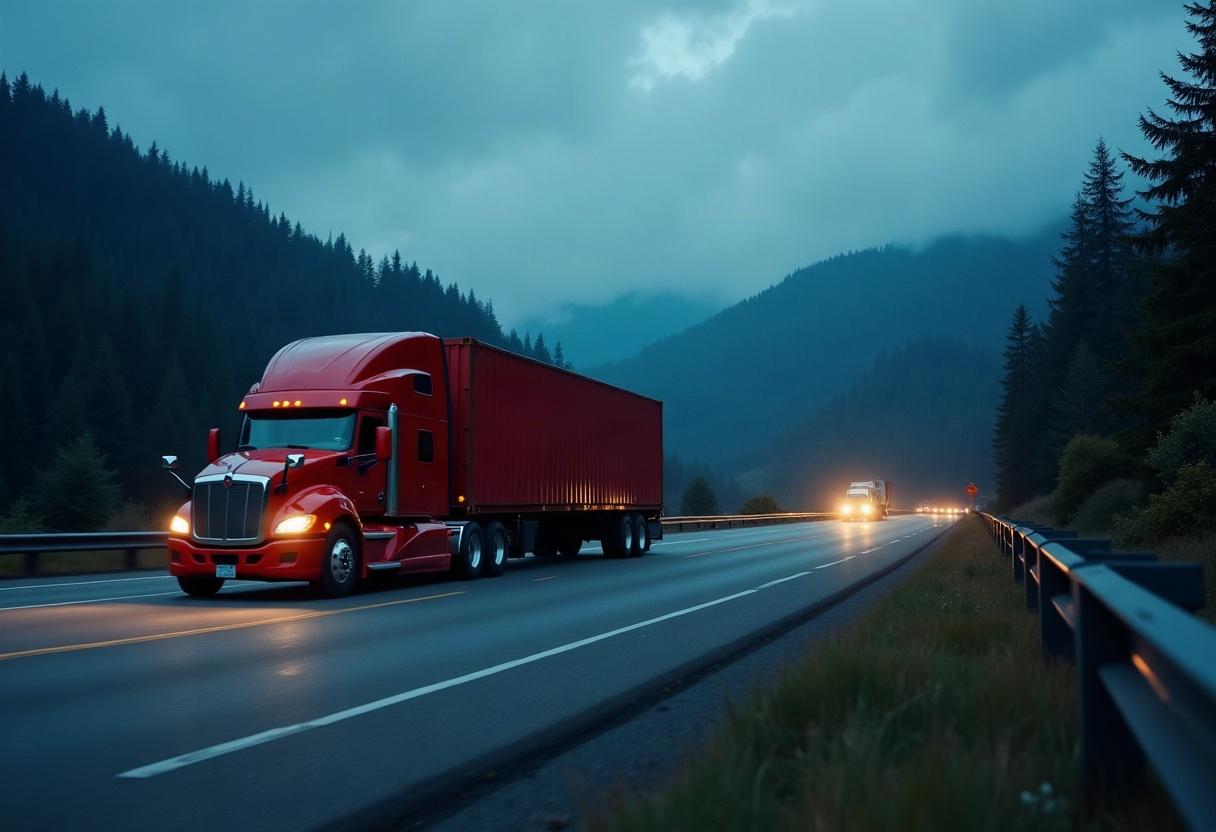
Trucking is the mode most shippers touch directly. Full truckload (FTL) gives you an entire 53-foot trailer; less-than-truckload (LTL) consolidates your pallets with other shippers' freight on the same trailer. Virtually every shipment — including ocean and rail cargo — touches a truck for at least the first or last leg. Our inland freight transport service covers exactly these regional road moves.
2. Rail
Rail moves bulk commodities and intermodal containers over long distances at low cost per mile. In Washington, intermodal rail connects the Puget Sound ports with Midwest and East Coast markets, and port and rail drayage is the truck leg that connects rail ramps and marine terminals to warehouses.
3. Ocean
Container ships carry the overwhelming majority of imported goods. For Washington shippers, the Ports of Seattle and Tacoma are the entry points — cargo arrives in 20-foot and 40-foot containers that then need drayage to their inland destination.
4. Air
Air freight is the fast, expensive mode: high-value, time-critical, or perishable cargo. Most air freight in the region moves through Seattle-Tacoma International Airport and still finishes its journey on a truck.
5. Pipeline
Pipelines move liquids and gases — fuel, chemicals, water — and are largely invisible to typical shippers, but they carry a significant share of US tonnage.
In practice, most import freight through Washington is intermodal: ocean vessel to marine terminal, truck drayage to a warehouse, then road delivery to the end customer.
How a Freight Shipment Actually Moves
A typical container import into the Kent Valley looks like this:
- Arrival. The ocean vessel berths at Terminal 18 in Seattle or the Washington United Terminal in Tacoma, and the container is discharged to the yard.
- Drayage. A trucking company pulls the container through the terminal gate — the chassis fee and gate queue are the drayage carrier's problem to manage.
- Transloading or delivery. The container either goes straight to the consignee's dock, or to a warehouse where it is transloaded — unloaded and re-palletized onto a domestic 53-foot trailer so the marine container can be returned before per-diem charges start.
- Final delivery. The domestic trailer delivers to the receiving dock, with appointment scheduling, liftgate service, or inside delivery added as needed.
Every handoff in that chain — gate, dock, warehouse — is where delays and fees hide, which is why experienced shippers care as much about the carrier's local knowledge as the linehaul price.
How Freight Transport Is Priced
Freight rates are built from a handful of components:
- Linehaul. The base cost of moving the trailer the distance, driven by weight, mileage, and lane density.
- Fuel surcharge. A percentage that floats with diesel prices.
- Equipment. Refrigerated, flatbed, and oversized equipment command premiums over dry van.
- Accessorials. Liftgate delivery, inside delivery, limited-access sites (schools, military, construction), detention and waiting time, and after-hours appointments.
- Container-specific fees. For drayage: chassis fees, per-diem (daily container rental from the steamship line), demurrage (storage at the terminal), and pre-pull or yard storage when the receiver is not ready.
For shippers in the Seattle–Tacoma corridor, the biggest controllable costs are usually demurrage and per-diem — both are clock-driven fees that disappear when the drayage and warehouse legs are coordinated under one roof.
Why Location Matters: The Kent Valley Advantage
Freight cost is largely a function of distance and congestion. The Kent Valley — home to All Season Transport — sits almost exactly between the Port of Seattle and the Port of Tacoma, with direct access to I-5, SR 167, and I-405. That geometry means:
- Short drayage turns. Container round trips from either port are measured in hours, not days, which keeps per-load drayage cost down and lets a truck run multiple turns per day.
- Warehouse adjacency. Kent, Sumner, and Auburn hold one of the densest concentrations of distribution space in the state — transloading and cross-dock facilities are minutes from the marine terminals.
- Escape valves for congestion. When terminal gates at one port back up, an Kent-based carrier can flex to the other port or to off-peak gate hours without repositioning equipment across the metro area.
Freight vs. Parcel: A Quick Comparison
| | Parcel | Freight | |---|---|---| | Typical size | Under 150 lb per package | Pallets, containers, bulk | | Pricing | Per package | Weight, distance, equipment, accessorials | | Equipment | Conveyor and van | Dock, trailer, chassis, liftgate | | Paperwork | Shipping label | Bill of lading, delivery receipt, customs (for imports) | | Receiver | Often a consumer | Almost always a business with a dock |
The line is simple: once your shipment needs a pallet jack or a dock, you are in freight territory.
Choosing a Freight Carrier
Price is the easiest number to compare and the least reliable predictor of landed cost. When evaluating a trucking partner in the Pacific Northwest, look at:
- Terminal knowledge. A carrier that knows the gate hours, appointment systems, and congestion patterns of the Seattle and Tacoma terminals will consistently beat one that does not, regardless of quoted rate.
- Equipment ownership. Asset-based carriers control their own trucks and chassis, which means fewer surprises when containers pile up at the terminal.
- Warehouse integration. Carriers affiliated with transloading and warehouse facilities can return containers fast and store freight without a second vendor relationship.
- Communication. Tracking updates, proactive delay notices, and a dispatcher who answers the phone are worth real money when a receiving appointment is on the line.
The Bottom Line
Freight transport is the system that moves commercial goods by truck, rail, ocean, and air — and in Washington, it runs through the Ports of Seattle and Tacoma and the warehouse corridor of the Kent Valley. Understand the modes, the handoffs, and the fee clocks (per-diem, demurrage, detention), and you control the costs that surprise most shippers.
If you are importing through Puget Sound or moving freight regionally, contact All Season Transport about drayage, transloading, and inland freight moves from our Kent, Washington base.
FAQ
- What is freight transport?
- Freight transport is the movement of goods in bulk — by truck, rail, ocean vessel, or air — between businesses, ports, warehouses, and distribution centers. Unlike parcel shipping, freight moves palletized or containerized cargo on scheduled trucks and ships, and it is priced by weight, distance, equipment, and handling requirements rather than by package.
- What are the main modes of freight transport?
- The five main modes are road (truck), rail, ocean, air, and pipeline. Most international cargo reaching the Pacific Northwest is intermodal: ocean container to the Port of Seattle or Tacoma, then truck drayage to a warehouse, then road delivery to the final destination.
- How is freight transport cost calculated?
- Freight pricing is built from distance, weight and volume, equipment type, fuel surcharges, and accessorial services such as liftgate delivery, inside delivery, or waiting time. Container drayage in the Kent–Seattle–Tacoma corridor is typically quoted as a flat lane rate plus per-diem and chassis fees.
- What is the difference between freight and parcel shipping?
- Parcel shipping covers small packages handled by carriers like USPS, UPS, and FedEx, priced per package. Freight covers palletized or containerized cargo over roughly 150 pounds, moves on trucks with docks or liftgates, and requires a freight carrier, bill of lading, and appointment scheduling at the receiving end.
- How long does freight transport take in Washington State?
- Regional truck freight within Washington usually delivers same-day to next-day — the Kent Valley sits about 20 to 30 minutes from the Ports of Seattle and Tacoma, so drayage and inland moves are short. Cross-country truckload freight runs 4 to 6 days, while ocean import legs depend on the origin port and sailing schedule.