
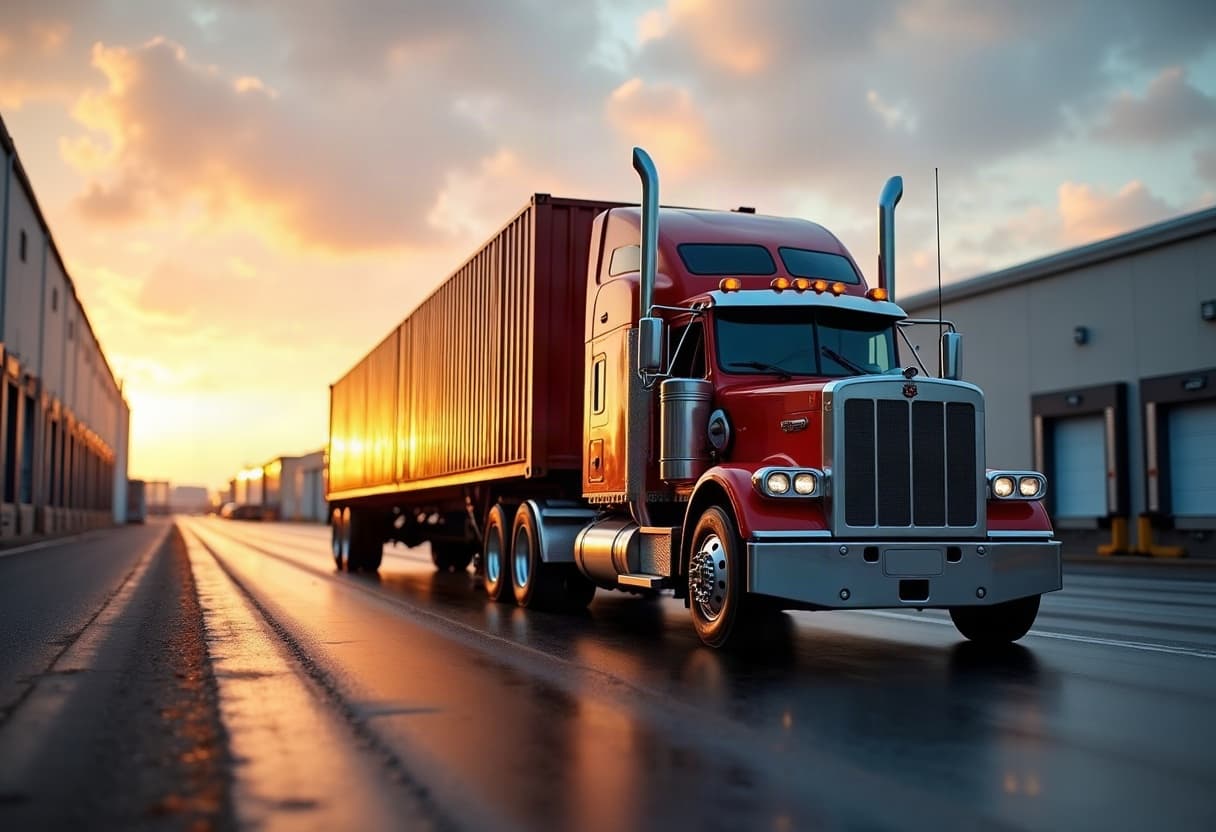
Freight Carrier Services: What They Do and Why Shippers Need One
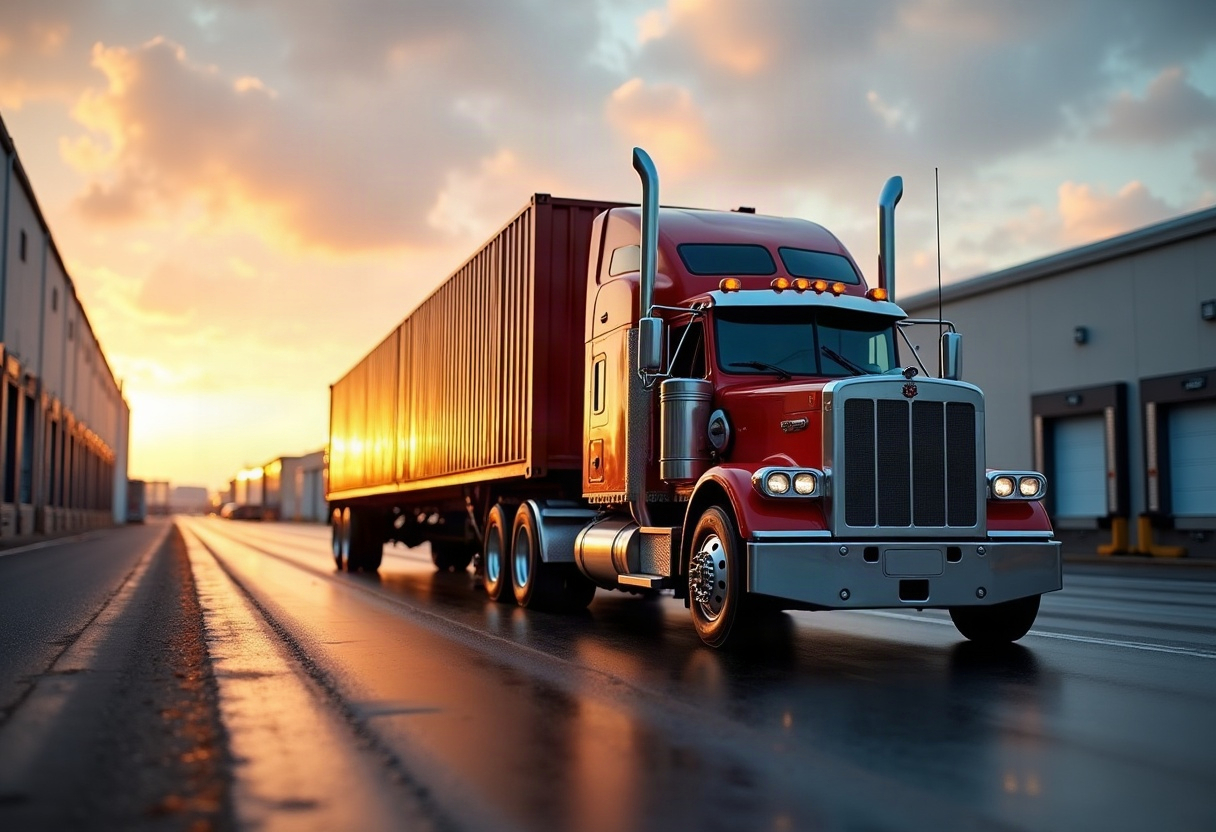
When a shipper calls a freight carrier, they are calling a company that owns trucks, employs drivers, and physically moves cargo from Point A to Point B. That sounds simple. But the distinction between a freight carrier and a freight broker — and between an asset-based carrier and one that relies on rented equipment — determines whether your freight arrives on time or sits on a dock waiting for a truck that does not exist.
What a Freight Carrier Actually Does
A freight carrier's core job is transporting goods. The carrier receives a shipment, assigns a truck and driver, loads the freight, secures it for transport, drives it to the destination, and unloads it. Behind that simple sequence sits a layer of operational infrastructure: dispatch coordination, DOT compliance, driver hours-of-service tracking, equipment maintenance, cargo insurance, and customs bonding for international freight.
For shippers moving freight through the Pacific Northwest, the carrier's physical location matters as much as its fleet size. All Season Transport operates from 22408 76th Ave S in Kent, WA — a terminal position that puts trucks within 15 miles of the Port of Seattle and 12 miles of the Port of Tacoma. That proximity means a driver can pick up a container at Terminal 46 in Seattle, deliver it to a warehouse in the Kent Valley, and be back at the terminal for another load in under three hours. A carrier based 50 miles north or south cannot match that turnaround.
Asset-Based Carrier vs. Freight Broker
The freight industry uses two models to move cargo:
Asset-based carriers own their trucks, trailers, and chassis. When you book a load with an asset-based carrier, the truck that shows up belongs to them. The driver is their employee or operates under their operating authority. The maintenance schedule is theirs. The insurance is theirs. The capacity is guaranteed because the equipment physically exists in their yard.
Freight brokers do not own trucks. They arrange transportation by posting your load on a digital board and waiting for an independent owner-operator to accept it. The broker adds a margin on top of the carrier's rate. During peak shipping season — or when capacity tightens after a weather event or port surge — a brokered load may sit for days with no truck available. The broker has no equipment to fall back on.
All Season Transport is an asset-based carrier with 60 company-owned trucks and 200 private chassis. When a shipper books a drayage move from the Port of Tacoma to a Sumner distribution center, the truck and chassis come from our Kent yard. No broker markup. No capacity uncertainty.
Types of Freight a Carrier Hauls
Freight carriers handle several categories of cargo, each requiring different equipment and certifications:
- Container drayage: Moving shipping containers between ports, rail terminals, and warehouses. Requires chassis and, for customs-bonded moves, a bonded carrier certificate. All Season Transport holds customs-bonded authority, allowing in-bond movement of cargo that has not yet cleared U.S. Customs.
- Inland freight transport: Regional long-haul and short-haul trucking across state lines. A Kent-based carrier serving the I-5 corridor can reach Seattle, Tacoma, Portland, and Spokane in a single day's drive.
- Transloading freight: Cargo that transfers from one mode of transport to another — typically from ocean container to truck, or from rail to truck. Transloading requires a warehouse with dock doors and forklift capacity at the transfer point.
- Oversized and specialized freight: Loads that exceed standard dimensions and require permits, escort vehicles, or specialized trailers like flatbeds and step-decks.
Why Carrier Location Matters for PNW Shippers
The Pacific Northwest has three major freight nodes: the Port of Seattle, the Port of Tacoma, and the rail intermodal yards in Kent and Sumner. A freight carrier's distance from these nodes directly affects your costs and transit times.
A carrier based in Kent, WA sits at the center of this network. The Kent Valley has become the primary distribution corridor for the Puget Sound region, with major retailers, 3PL warehouses, and cross-dock facilities concentrated along the SR 167 corridor. When your carrier's yard is in Kent, the drayage move from the port to the warehouse is a 20-30 minute drive. When your carrier is based in Portland or Central Washington, that same move becomes a 2-4 hour round trip — and you pay for the empty miles.
How to Evaluate a Freight Carrier
Before booking freight with a carrier, ask these questions:
- Do you own your trucks? An asset-based carrier can guarantee capacity. A broker cannot.
- Are you customs-bonded? If you import cargo through Seattle or Tacoma, a bonded carrier can move containers under bond directly off the terminal without waiting for customs clearance.
- How many chassis do you own? Chassis shortages at PNW ports are a recurring problem. A carrier with its own chassis fleet (All Season Transport operates 200 private chassis) eliminates the dependency on terminal pool equipment.
- What is your service area? A carrier serving WA, OR, MT, ID, and CA covers the standard PNW freight lanes. If you ship beyond those states, confirm the carrier's operating authority extends to your destination.
- Do you have warehousing capability? A carrier with an adjacent warehouse can receive, sort, and stage your freight — turning a simple trucking move into an integrated logistics solution.
The Cost Structure of Freight Carrier Services
Freight carrier pricing depends on distance, load type, equipment requirements, and market conditions. For Pacific Northwest regional moves, the key cost factors are:
- Drayage moves (port to warehouse, typically under 50 miles): Priced as a flat rate per move, with factors for chassis type, container size (20ft vs 40ft), and whether the move requires bonded handling.
- Inland freight (regional long-haul, 100+ miles): Priced per loaded mile, with fuel surcharges adjusted weekly based on the national diesel average.
- Transloading services: Priced per container or per pallet, depending on the labor and equipment required to transfer cargo between modes.
A Kent-based carrier with its own equipment and warehouse can bundle these services at a lower total cost than contracting separately with a drayage carrier, a long-haul carrier, and a warehouse.
Freight Carrier Services at All Season Transport
All Season Transport operates as an asset-based, customs-bonded freight carrier from Kent, WA. Our services include:
- Port and rail drayage — Customs-bonded container transport to and from the Port of Seattle, Port of Tacoma, and regional rail yards. Learn more on our Port & Rail Drayage service page.
- Inland freight transport — Regional trucking across Washington, Oregon, Montana, Idaho, and California. See our Inland Freight Transport service for service area details.
- Transloading solutions — Cargo transfer between ocean containers, rail cars, and trucks at our Kent facility. Read our drayage guide for how transloading fits into the intermodal supply chain.
- Asset-based warehousing — Secure storage, sorting, and staging of palletized cargo and containers at our adjacent Kent yard.
For shippers who need a freight carrier that owns its equipment, holds customs bonding, and operates from the Kent Valley logistics corridor, contact All Season Transport to discuss your shipping requirements. Our dispatch operates 24/7 from 22408 76th Ave S, Kent, WA 98032.
FAQ
- What is a freight carrier?
- A freight carrier is a company that physically transports cargo from an origin point to a destination using its own trucks and equipment. Freight carriers operate as either asset-based (owning their fleet) or non-asset-based (brokering loads to third-party trucks). An asset-based freight carrier like All Season Transport owns 60 company-owned trucks and 200 private chassis, giving shippers guaranteed capacity and direct control over their freight.
- What is the difference between a freight carrier and a freight broker?
- A freight carrier physically moves your freight with its own trucks, drivers, and trailers. A freight broker arranges transportation by matching your load with a third-party carrier but does not own any trucks. Brokers add a markup and cannot guarantee capacity during peak season. An asset-based carrier eliminates that middleman, providing direct accountability, real-time equipment availability, and fixed operating costs.
- Why choose a Kent, WA freight carrier for Pacific Northwest shipping?
- A Kent, WA freight carrier sits at the intersection of I-5 and SR 167, roughly 15 miles from the Port of Seattle and 12 miles from the Port of Tacoma. This location cuts drayage time to the ports, reduces empty miles on container pickup, and gives shippers same-day delivery to Seattle, Tacoma, Auburn, and Renton. Kent's position in the Green River Valley also provides direct interstate access to Oregon, Idaho, Montana, and California lanes.
- Does All Season Transport operate as a freight carrier?
- Yes. All Season Transport is an asset-based, customs-bonded freight carrier operating from Kent, WA. We own 60 trucks and 200 private chassis, providing port and rail drayage, inland freight transport, transloading, and asset-based warehousing across Washington, Oregon, Montana, Idaho, and California.