
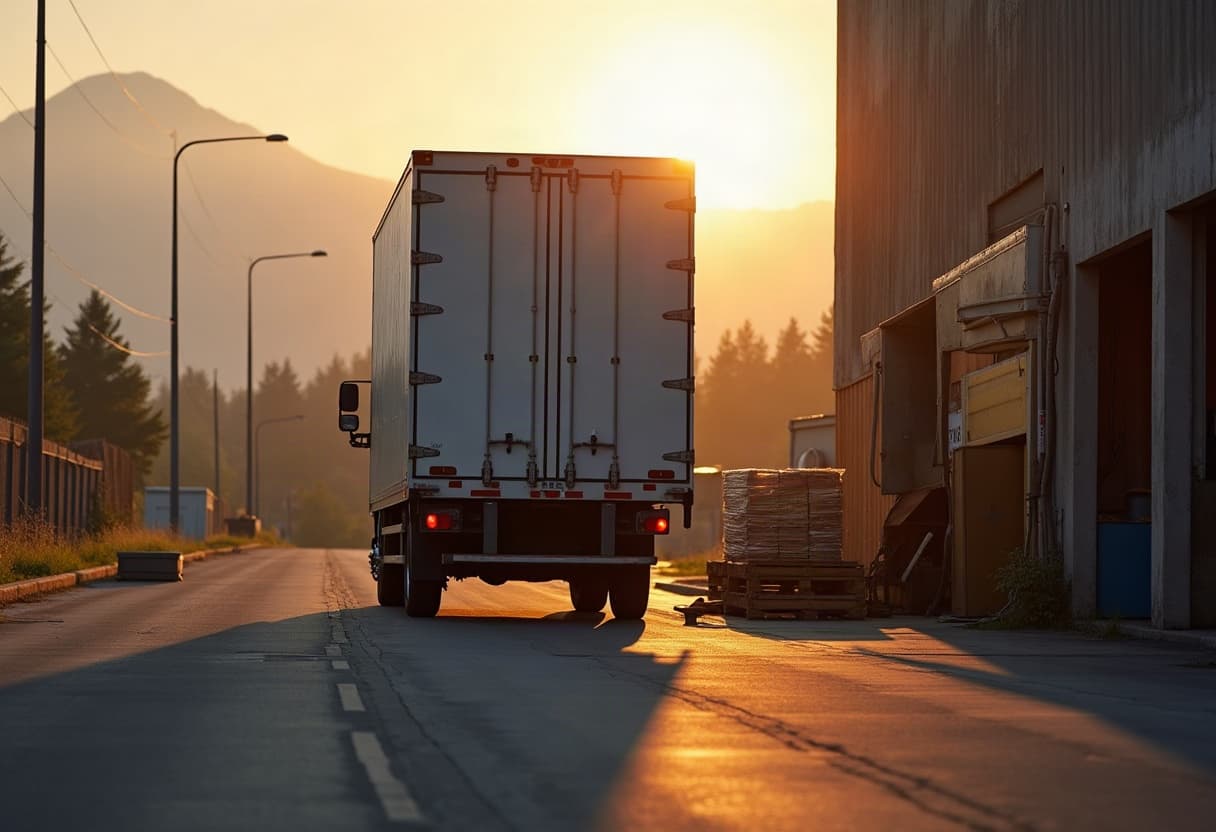
Last Mile Delivery Services: What Kent Shippers Need to Know
The last mile is where freight either makes it to the customer or does not. A container can clear customs at the Port of Seattle, get drayed to a warehouse in Kent, sit on a dock for three days, and still fail the delivery — because the truck that was supposed to take it the final five miles broke down, showed up late, or could not get a liftgate to the loading dock.
Last mile delivery services exist to close that gap. For Kent, WA shippers, the last mile is the stretch between a port terminal, rail ramp, or distribution center and the business, job site, or retail floor where the freight actually gets used. This post breaks down what last mile delivery means in a real Kent freight context, what it costs, what breaks, and what to look for in a carrier that actually runs the final mile instead of brokering it out.
What last mile delivery means in Kent, WA
Kent sits between the Port of Seattle and the Port of Tacoma — roughly 12 miles from each. The city is one of the largest distribution hubs on the West Coast, with over 60 million square feet of warehouse space in the Kent Valley. Freight flows through Kent the way water flows through a pipe: containers in, pallets out, trucks rolling to destinations across the Puget Sound and beyond.
Last mile delivery in this market typically means one of two moves:
- Port-to-warehouse drayage — a container discharges at Terminal 18 or Terminal 46 in Seattle, gets drayed 15 miles south to a Kent distribution center, and gets unloaded. This is technically drayage, but it is the first half of the last mile.
- Warehouse-to-destination final mile — a pallet or partial load leaves the Kent DC on a box truck with a liftgate and gets delivered to a business, construction site, or retail location in Seattle, Tacoma, Bellevue, or the Eastside. This is the true last mile — the delivery that reaches the customer's door.
A carrier that handles both legs under one roof keeps the freight moving. A carrier that brokers the final mile to a third party adds a handoff, a delay, and a point where chain of custody breaks.
What makes last mile delivery hard
The last mile is the most expensive and least efficient leg of the supply chain. Here is why:
- Dockless deliveries. Not every destination has a loading dock. Construction sites, retail stores, and small businesses need a liftgate truck and a pallet jack. If the carrier shows up without the right equipment, the freight sits on the truck and the delivery window closes.
- Time windows. A construction site in Seattle might accept deliveries only between 7 AM and 10 AM. A retail store might have a two-hour window before it opens to customers. Miss the window and the truck comes back tomorrow.
- Traffic. I-5 through the Kent Valley and SR 167 into the Eastside are unpredictable. A 30-mile final-mile delivery from Kent to Bellevue can take 45 minutes at 11 PM or 90 minutes at 2 PM. Carriers that do not plan around traffic miss windows.
- Accessorial charges. Detention at the port, layover at the warehouse, attempted delivery at a closed business — every delay has a charge. A carrier that does not communicate accessorial costs up front lets them pile up on the invoice.
What to look for in a last mile carrier
A real last mile carrier in the Kent market should be able to answer five questions before the freight moves:
- Does the truck have a liftgate? If the destination does not have a dock, the answer has to be yes — or the delivery fails before it starts.
- Is the driver TWIC-certified? If the freight originates at a port terminal, the driver needs a Transportation Worker Identification Credential to enter. No TWIC, no pickup.
- What is the delivery window? The carrier should confirm the window with the receiver before the truck leaves, not after it arrives and finds a closed gate.
- How is the freight secured? Open loads, oversized freight, and temperature-controlled goods need specific equipment — straps, chains, tarps, or reefer units.
- Who tracks the shipment? A dispatcher with real-time visibility into driver location, delivery status, and exceptions is the difference between a delivery that arrives on time and one that disappears into a black hole.
What last mile delivery costs in Kent, WA
Pricing for last mile delivery in the Kent Valley depends on distance, weight, equipment, and scheduling. Typical ranges:
- Port drayage (Seattle/Tacoma to Kent): $200–$350 per container, plus fuel surcharge and any detention at the terminal.
- Final-mile delivery (Kent to Seattle/Eastside): $150–$450 per stop, depending on distance, weight, and whether a liftgate is required.
- Multi-stop delivery routes: $75–$150 per additional stop on the same truck, priced as a route rather than individual moves.
Carriers that quote flat rates without asking about equipment, scheduling, or accessorial charges are either leaving money on the table or planning to add it back on the invoice later. A carrier that asks the right questions before quoting is a carrier that has run the last mile before.
Why All Season Transport runs the last mile
All Season Transport operates a fleet of 50-plus trucks out of the Kent Valley — including liftgate-equipped box trucks, flatbeds, and drayage-capable tractors with TWIC-certified drivers. We handle both legs of the last mile: drayage from the Port of Seattle and Port of Tacoma to Kent distribution centers, and final-mile delivery from those DCs to businesses, job sites, and retail locations across the Puget Sound.
We track every delivery window, confirm equipment before dispatch, and tell you the truth about transit time when traffic or weather changes the plan. If you need last mile delivery services in Kent or the surrounding region, call us at (253) 972-4000 or request a quote online. See our transportation services for the full scope of what we move across the Puget Sound, or read our guide to starting a trucking company for more on what it takes to run freight in the Kent Valley.
FAQ
- What is last mile delivery in freight logistics?
- Last mile delivery in freight logistics is the final leg of a shipment's journey — moving a container or pallet from a distribution center, warehouse, or rail ramp to its end destination. In the Kent Valley, last mile typically means drayage from the Port of Seattle or Port of Tacoma to a local warehouse, then final-mile truck delivery to a business, job site, or retail location.
- How much does last mile delivery cost in Kent, WA?
- Last mile delivery in Kent, WA typically costs between $150 and $450 per delivery depending on distance from the port or warehouse, cargo weight, whether a liftgate is needed, and scheduling windows. Drayage moves from the Port of Seattle to Kent run on a standard tariff; final-mile deliveries within the Kent Valley are priced per stop or per mile.
- What equipment does a last mile carrier need?
- A last mile carrier needs liftgate-equipped trucks for dockless deliveries, strap and chain securing for open loads, pallet jacks for hand-unload situations, and a dispatcher who tracks delivery windows in real time. For port drayage last mile, the carrier also needs TWIC-certified drivers for terminal access and a valid motor carrier registration.
- How is last mile delivery different from drayage?
- Drayage is the short-haul move of a container from a port or rail terminal to a nearby warehouse. Last mile delivery is the final delivery from that warehouse to the end business or job site. A full-service Kent carrier handles both — drayage from the Port of Seattle to a Kent distribution center, then last mile delivery from that DC to the customer.
- Does All Season Transport provide last mile delivery services in Kent, WA?
- Yes. All Season Transport runs last mile delivery services out of the Kent Valley — drayage from the Port of Seattle and Port of Tacoma to local warehouses, then final-mile delivery to businesses, construction sites, and distribution centers across the Puget Sound region. Our fleet includes liftgate-equipped trucks, TWIC-certified drivers, and a dispatch team that tracks every delivery window.