
How Much Does It Cost to Start a Trucking Company
Starting a trucking company is one of the few businesses where a single person with a commercial license can build a real enterprise. It is also a business where the upfront costs can sink you before the first load delivers. The question every new owner-operator asks is simple: how much does it actually cost to start?
The honest answer is a range. A lean owner-operator leasing a used truck and running under their own authority can get rolling for around $30,000 to $50,000. A small fleet with new equipment, full insurance, and paid-in permits is closer to $150,000 to $200,000. This guide breaks down every line item so you can build a realistic startup budget for your own trucking company.
The truck: your largest single expense
The tractor is the biggest check you will write. Your options break into three tiers:
- Used day cab or older sleeper ($30,000 to $70,000): A truck with 500,000-plus miles. Cheaper upfront, higher maintenance, and harder to finance. Good for an owner-operator who can turn a wrench or has a trusted mechanic.
- Late-model used truck ($70,000 to $120,000): Three to five years old, 300,000 to 450,000 miles. The sweet spot for most new authorities — modern enough to pass inspections, old enough that the depreciation curve has flattened.
- New Class 8 tractor ($120,000 to $180,000): Full warranty, lowest downtime, highest monthly payment. Usually requires strong credit or a co-signer for a first-time buyer.
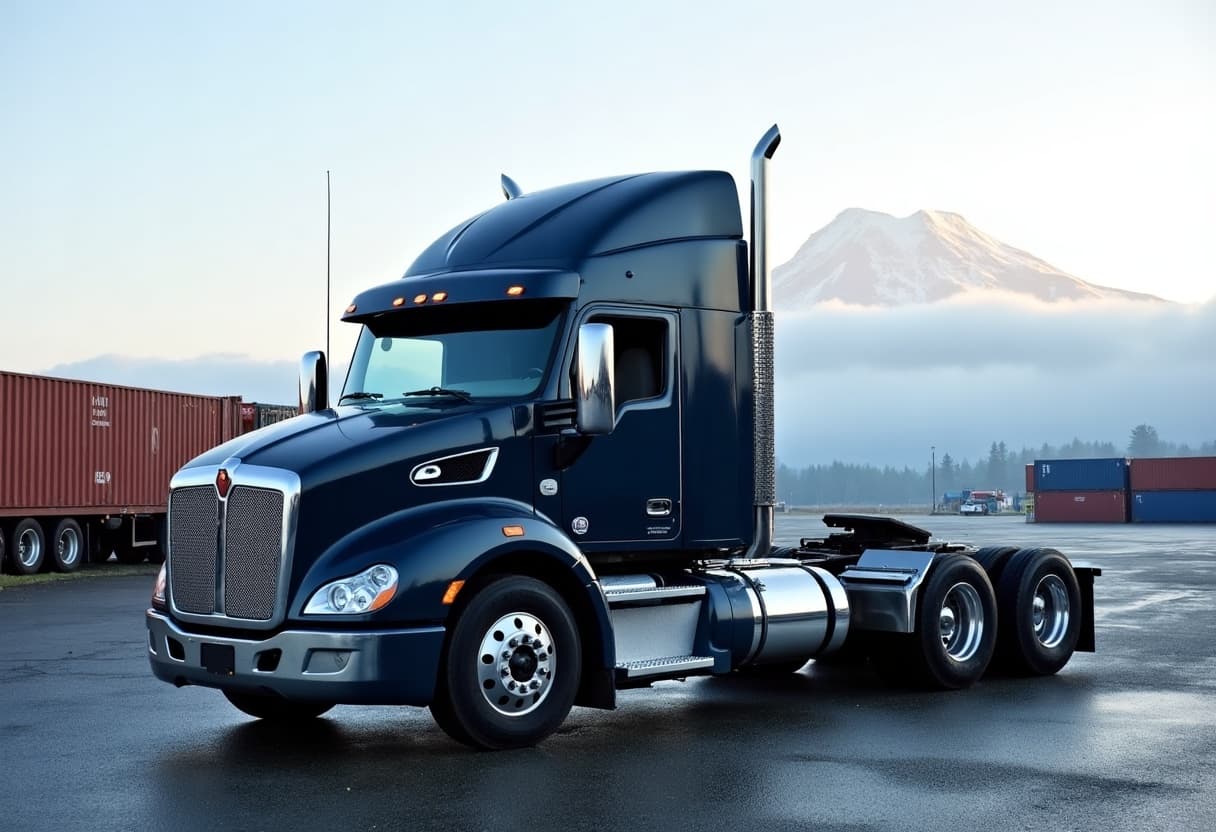
If you are running drayage out of a port like Seattle or Tacoma, a day cab is often all you need — the lanes are short, the trucks return home nightly, and a sleeper is dead weight. Intermodal and container drayage carriers in the Kent, WA corridor typically run day cabs paired with company-owned chassis, which keeps the truck spec simpler and the fuel burn lower.
Leasing a truck is a third option. A lease-to-own arrangement can get you into a truck for $1,000 to $3,000 down and $2,000 to $4,000 per month. Read the contract carefully — many leases bury balloon payments or mileage caps that catch new owners off guard.
Insurance: the cost that surprises everyone
New motor carrier authority means no safety history. That makes insurance expensive. Expect to pay:
- Primary liability ($5,000 to $12,000 per year): Required by the FMCSA at a minimum of $750,000 for general freight, $1,000,000 for hazardous materials.
- Cargo insurance ($1,000 to $3,000 per year): Covers the freight in your trailer. Shippers and brokers often require a minimum of $100,000 in cargo coverage.
- Physical damage ($2,000 to $5,000 per year): Covers your truck and trailer for collision and comprehensive claims, usually priced as a percentage of the truck's value.
- Bobtail and non-trucking liability ($500 to $1,500 per year): Needed if you ever run under your own authority while not under dispatch.
A new authority with one truck should budget $8,000 to $18,000 for the first year of insurance. After 12 to 24 months of clean inspections and zero at-fault accidents, those rates drop substantially. This is why many new owner-operators start under a carrier's lease for a year before getting their own authority — the insurance is the deciding factor.
Permits and registrations: smaller checks, but all required
The paperwork is not optional. Here is what a new interstate carrier needs:
- USDOT number (free): Issued by the FMCSA. Required for any commercial vehicle over 10,000 GVW operating in interstate commerce.
- MC authority ($300): The for-hire operating authority. Takes 3 to 5 weeks to activate once you file your insurance.
- UCR registration ($39 to $39,000): Unified Carrier Registration, scaled by fleet size. A single-truck operation pays $39 to $76 depending on the state.
- IFTA license (free, but quarterly filings required): International Fuel Tax Agreement — you report miles and fuel purchases by state each quarter.
- IRP plate ($500 to $2,000): International Registration Plan apportioned plate for interstate operations.
- BOC-3 process agent ($50 to $100 per year): A designated representative in each state where you operate, required before MC authority is granted.
- New York, New Mexico, Kentucky, and Oregon weight permits: Only if you run those states. Oregon charges a per-mile weight-mile tax that applies to any truck over 26,000 pounds.
Budget $1,500 to $3,500 for permits and registrations in your first 60 days. It is not the biggest cost, but missing one of these can park your truck.
Fuel: your largest ongoing operating cost
Fuel is not a startup cost, but you need cash reserves for it before your first settlement check arrives. A Class 8 truck burns roughly 6 to 8 miles per gallon loaded. At 2,500 miles per week with diesel at $4.50 per gallon, that is $1,400 to $1,800 per week in fuel alone.
Most new owner-operators use a fuel card with a discount at major truck stops. The discount typically saves 10 to 30 cents per gallon, which adds up to $1,500 to $3,000 per year. You still need enough working capital to cover two to three weeks of fuel before your first freight payment clears.
Maintenance and reserves: the cost people forget
A truck that runs 2,500 miles a week needs regular service. Budget for:
- Oil and filters ($300 to $500 per month): Routine PM at 15,000 to 25,000 mile intervals.
- Tires ($400 to $600 per set, twice a year): Drive tires wear faster than steer or trailer tires.
- Brakes, air lines, and suspension ($1,000 to $3,000 per year): Wear items that fail on schedule.
- Major repair reserve ($0.15 to $0.25 per mile): A separate account for the inevitable in-frame rebuild, transmission, or aftertreatment system failure.
The standard advice is to set aside $0.15 to $0.25 per mile in a maintenance reserve from your first settlement. If that sounds high, talk to any owner-operator who has had a DPF failure in the middle of a load — the reserve pays for itself the first time it happens.
A real-world example from the Pacific Northwest
All Season Transport operates a 50-plus truck fleet out of Kent, WA, running container drayage and intermodal freight between the Port of Seattle, the Port of Tacoma, and regional distribution centers across Washington, Oregon, Idaho, and Montana. That operation did not start at 50 trucks — it started with the same cost decisions every new trucking company faces, and grew by reinvesting revenue into equipment and insurance capacity.
The Kent Valley is a useful case study for anyone planning to start a trucking company in a port-adjacent market. The short drayage lanes mean lower fuel costs and less overnight wear than long-haul, but the insurance and permit requirements are identical to any interstate carrier. If you are weighing the asset-based carrier model against a broker operation, the cost structure is the same decision in a different form — do you own the equipment, or pay someone else for access to theirs?
Working capital: the number nobody quotes you
Beyond the truck, insurance, and permits, you need working capital. The trucking industry pays on net-30 to net-60 terms, which means you deliver a load today and may not see the money for 45 days. During that gap, you pay for fuel, tolls, and maintenance out of pocket.
A realistic working capital reserve for a single-truck operation is $15,000 to $25,000. That covers fuel for two to three weeks, a major repair deposit, and living expenses before the first settlement arrives. Without it, a single delayed payment can force you to park the truck or take a factoring advance that eats 3 to 5 percent of your revenue.
Total startup cost summary
Here is what a single-truck owner-operator getting their own authority should budget:
| Category | Low end | High end | |----------|---------|----------| | Used truck (cash or down payment) | $10,000 | $70,000 | | Insurance (first year, one truck) | $8,000 | $18,000 | | Permits and registrations | $1,500 | $3,500 | | Working capital reserve | $15,000 | $25,000 | | Miscellaneous (chains, binders, ELD, etc.) | $1,000 | $3,000 | | Total | $35,500 | $119,500 |
A new truck, a larger fleet, or hauling specialized freight pushes the total higher. A lease-to-own arrangement lowers the upfront truck cost but raises the monthly obligation. The number that matters is the one you can sustain through your first year — not the number that gets you to the first load.
Building from the first truck
Every trucking company starts with the same stack of costs. The ones that survive the first year are the ones that planned for the gap between the first delivery and the first payment, set aside a maintenance reserve from mile one, and understood that insurance is not a one-time purchase but an ongoing cost that rewards a clean safety record.
If you are shipping freight through the Pacific Northwest and want to work with an established, asset-based carrier rather than building your own operation from scratch, contact All Season Transport for drayage and regional freight service from Kent, WA. For more background on how the port-to-warehouse chain works, our container drayage guide and drayage services in Seattle and Tacoma cover the lanes and costs you can expect.
FAQ
- How much does it cost to start a trucking company?
- Starting a trucking company typically costs between $30,000 and $200,000. A single-truck owner-operator leasing a used truck and running under their own authority can start near the low end, while a small fleet with new equipment, full insurance, and paid-in permits sits at the high end.
- What is the biggest startup cost for a new trucking company?
- The truck itself is the largest expense. A used day cab runs $30,000 to $70,000, a new Class 8 tractor costs $120,000 to $180,000, and a lease-to-own arrangement requires a down payment plus monthly payments. Insurance is the second largest cost, especially for new authorities with no safety history.
- What permits and registrations does a new trucking company need?
- A new motor carrier needs a USDOT number, MC authority (about $300), a UCR registration ($39 to $39,000 by fleet size), an IFTA license, an IRP plate, and a BOC-3 process agent. For-hire interstate carriers also need a minimum $750,000 liability insurance policy on file with the FMCSA.
- How much does trucking insurance cost for a new authority?
- New-authority trucking insurance typically runs $8,000 to $18,000 per truck per year for primary liability, cargo, and physical damage coverage. New authorities pay more because there is no safety record — rates drop after 12 to 24 months of clean inspections and accident-free miles.