
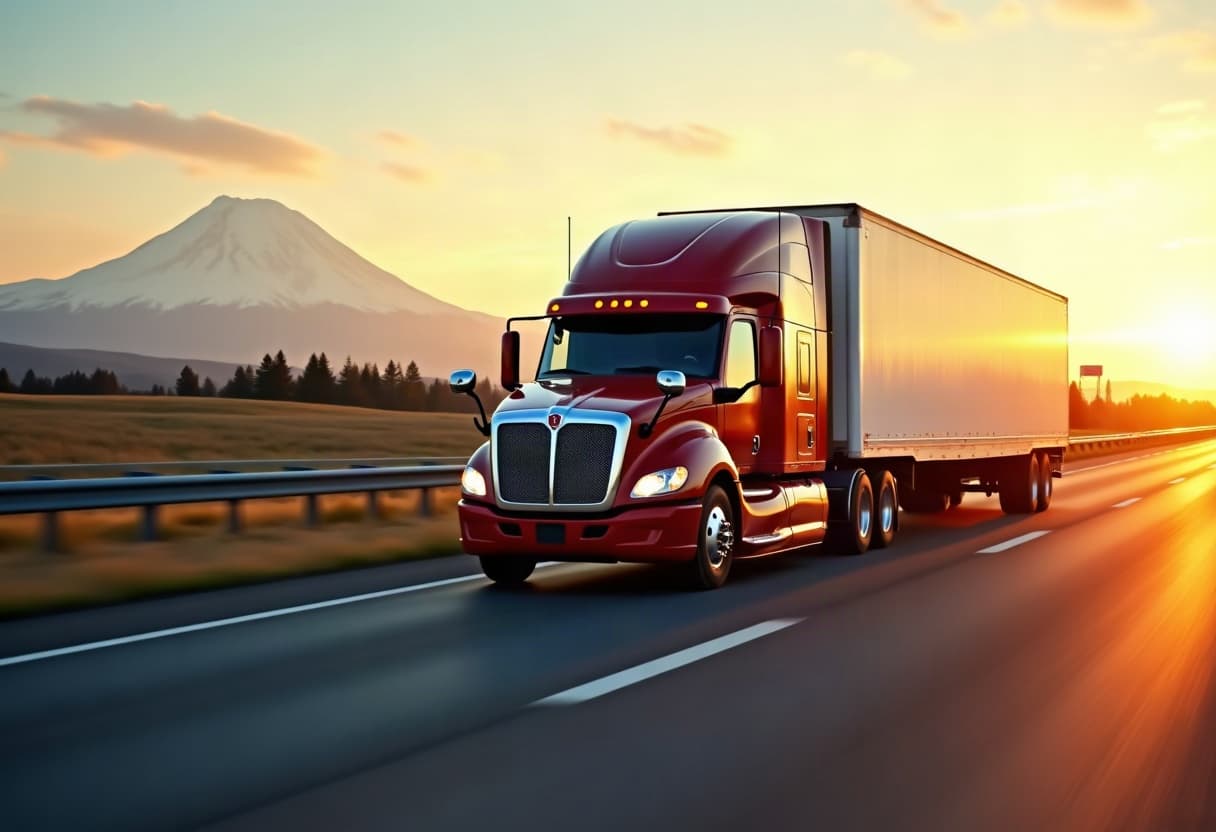
Freight Hauling Services in Kent, WA
A container clears customs at the Port of Tacoma. A palletized load needs to reach a distributor in Spokane. A construction project in Boise is waiting on steel beams. All of these start the same way — with a truck, a driver, and a route. That is freight hauling: the backbone of how goods move across the Pacific Northwest and beyond.
If you are searching for freight hauling services, you probably have cargo that needs to get from point A to point B reliably, on time, and without a broker chain adding cost and confusion. This guide explains what freight hauling covers, how it works in the Puget Sound region, and why a Kent-based carrier gives you a practical edge.
What freight hauling covers
Freight hauling is the truck-based movement of goods over distances ranging from a few miles to several states. It is the broad category that includes several specialized services:
- Regional freight hauling — moves cargo between cities within the Pacific Northwest, such as Kent to Portland, Seattle to Spokane, or Tacoma to Boise. These runs typically use 53-foot dry vans, flatbeds, or container chassis depending on the cargo.
- Long-haul freight — covers multi-state routes spanning Washington, Oregon, Montana, Idaho, and California. Long-haul requires drivers with the right hours-of-service compliance and carriers with the fleet depth to keep loads moving without delays.
- Containerized freight hauling — involves pulling shipping containers on chassis from ports, rail yards, or warehouses to their final destinations. This is where port drayage transitions into line-haul freight hauling.
- Specialized freight — handles oversize, overweight, or temperature-sensitive cargo that requires flatbeds, step-decks, RGN trailers, or refrigerated units. Flatbed and specialized trucking covers these loads in more detail.
The type of freight hauling you need depends on your cargo, your timeline, and where it needs to go. A carrier based in the Kent Valley can handle all of these from a single dispatch point.
Why Kent, WA is a strategic base for freight hauling
Kent sits at the intersection of I-5 and SR-167 in the heart of the Kent Valley — one of the densest logistics corridors in the Pacific Northwest. The city is roughly 15 miles from the Port of Seattle and 12 miles from the Port of Tacoma, making it the natural midpoint for freight moving between the ports and inland destinations.
A freight hauler based in Kent has three structural advantages:
-
Short deadhead miles. The distance between the carrier's yard and the port, rail yard, or warehouse is short. That means lower fuel costs, faster response times, and more capacity available on any given day.
-
Direct interstate access. I-5 runs north to Seattle and south to Portland, Sacramento, and beyond. SR-167 connects Kent to Auburn, Sumner, and the industrial east side of the Puget Sound. A truck leaving Kent can reach any major Pacific Northwest destination without navigating urban congestion.
-
Proximity to warehousing. The Kent Valley holds millions of square feet of warehouse and distribution space. Freight that needs to be stored, transloaded, or cross-docked before its final move can do so within minutes of the carrier's yard — not hours.
Transport services in Kent, WA dive deeper into why the Kent Valley is the logistics hub of the region.
Freight hauling vs. drayage: what is the difference?
The two terms get used interchangeably, but they describe different legs of the supply chain.
Drayage is the short-haul truck move of a shipping container between a marine terminal and a nearby facility — usually within a 50-mile radius. It is the first leg: container comes off the ship, gets put on a chassis, and gets hauled to a warehouse or rail yard. Container drayage covers this process in detail.
Freight hauling is everything after that. Once the container is at the warehouse, the freight inside it may need to go to a distribution center in Spokane, a retail location in Portland, or a construction site in Missoula. That longer move — whether it is the same container on a chassis, or palletized freight in a dry van — is freight hauling.
In practice, many Kent-based carriers do both. A container gets drayed from the Port of Tacoma to a Kent warehouse, then the same carrier hauls the freight to its final destination across state lines. Using a single carrier for both legs eliminates a handoff, reduces transit time, and gives you one point of accountability for the entire move.
What to look for in a freight hauling carrier
Not every carrier is the same. When you are choosing a freight hauler for Pacific Northwest cargo, look for:
- Asset-based operations. An asset-based carrier owns its trucks and employs its drivers. A broker does not — they find a truck for your load and take a margin. Asset-based carriers offer guaranteed capacity and a single point of accountability. All Season Transport operates 60 company-owned trucks, meaning your load does not get brokered to an unknown third party.
- Geographic coverage. Make sure the carrier actually runs the lanes you need. A carrier that only does local drayage cannot haul your freight to Idaho. All Season Transport covers Washington, Oregon, Montana, Idaho, and California.
- Equipment diversity. If you haul containers today and flatbed loads tomorrow, you need a carrier with both chassis and flatbeds in the yard. Specialized freight — oversize, overweight, or temperature-controlled — requires additional equipment.
- Terminal knowledge. Port drayage requires familiarity with the Port of Seattle and Port of Tacoma terminal procedures, appointment systems, and congestion patterns. A Kent-based carrier handles these terminals daily.
How All Season Transport handles freight hauling
All Season Transport is an asset-based carrier headquartered in Kent, WA, with a fleet of 60 company-owned trucks and 200 private chassis. The company provides inland freight transport across five states — Washington, Oregon, Montana, Idaho, and California — along with port drayage, flatbed and specialized trucking, and liftgate-equipped final-mile delivery.
Because the fleet is company-owned, every load has guaranteed capacity and a single driver under one roof. There are no brokered hand-offs, no third-party dispatchers, and no gaps in accountability. When your container comes off the terminal at Husky Terminal or Terminal 18, the same carrier that drays it to the warehouse can haul the freight to its final destination — whether that is a distribution center in Sumner or a job site in Billings.
If you have freight that needs to move, contact All Season Transport directly for a quote. The dispatch team can coordinate drayage, line-haul, and final-mile delivery as a single seamless move.
FAQ
What is freight hauling? Freight hauling is the truck-based transportation of goods over regional or long-haul distances. It covers containerized cargo, palletized freight, flatbed loads, and specialized shipments. A freight hauler provides the truck, driver, and equipment to move your cargo from origin to destination.
How is freight hauling different from drayage? Drayage is the short-haul move of a container between a port and a nearby facility, usually under 50 miles. Freight hauling covers the longer distances that follow — regional runs across the Pacific Northwest or long-haul routes spanning multiple states.
What areas does All Season Transport serve for freight hauling? All Season Transport hauls freight across Washington, Oregon, Montana, Idaho, and California using 60 company-owned trucks. The company is based in Kent, WA, positioned between the Port of Seattle and Port of Tacoma.
Do I need a liftgate for freight hauling? You need a liftgate when your pickup or delivery location has no loading dock and the freight is too heavy to hand-load. All Season Transport operates liftgate-equipped trucks for final-mile deliveries throughout the Puget Sound region.
FAQ
- What is freight hauling?
- Freight hauling is the truck-based transportation of goods from one location to another, typically over regional or long-haul distances. It covers everything from containerized cargo moved from ports to inland destinations, to palletized freight delivered to distribution centers, to oversize loads requiring specialized trailers. A freight hauler provides the truck, driver, and equipment to move your cargo safely and on schedule.
- How is freight hauling different from drayage?
- Drayage is a short-haul truck move, typically under 50 miles, that shuttles containers between a marine terminal and a nearby warehouse or rail yard. Freight hauling covers longer distances — regional runs across Washington and Oregon, or long-haul routes spanning multiple states. Drayage is the first leg; freight hauling is everything after the container leaves the port area.
- What areas does All Season Transport serve for freight hauling?
- All Season Transport hauls freight across Washington, Oregon, Montana, Idaho, and California using a fleet of 60 company-owned trucks. The company is based in Kent, WA, positioned between the Port of Seattle and Port of Tacoma, giving it direct access to the I-5 and SR-167 corridors for efficient Pacific Northwest freight movement.
- Do I need a liftgate for freight hauling?
- You need a liftgate when your pickup or delivery location has no loading dock and the freight is too heavy to hand-load. Residential deliveries, storefronts, and construction sites commonly require liftgate service. All Season Transport operates liftgate-equipped trucks for final-mile deliveries throughout the Puget Sound region.