
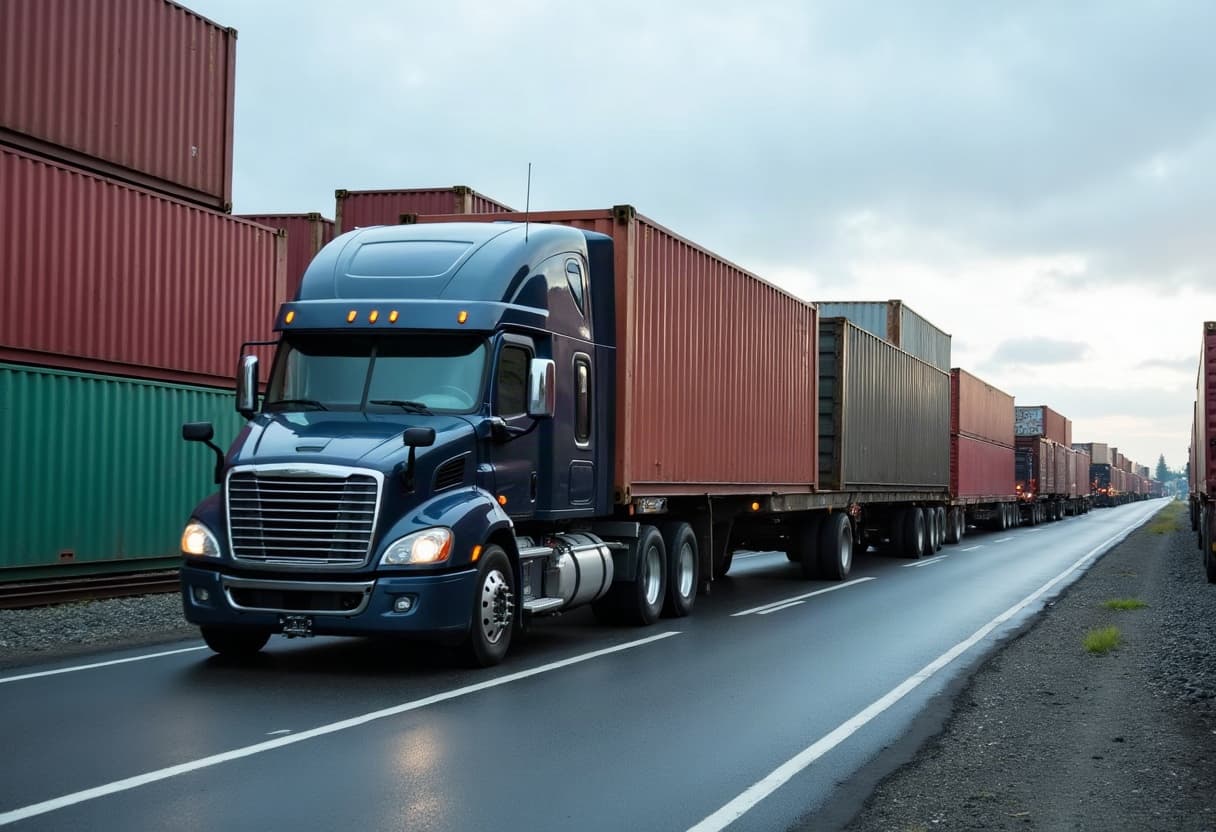
Terminal Transfer in Kent, WA: Moving Containers and Freight Between Rail, Port, and Warehouse
A container comes off a train at the rail ramp in the Kent Valley and needs to be on a warehouse dock ten miles away by the end of the day. Or a box discharged at the Port of Tacoma needs to catch a rail connection at the Seattle intermodal yard before the cutoff. Both are terminal transfer moves — the short-haul drayage of an intact container between freight terminals, rail ramps, ports, and warehouses — and they are the connective tissue of Pacific Northwest intermodal freight. Miss the terminal cutoff and the container sits for a day; make it and the supply chain keeps moving.
This guide explains what terminal transfer means in the Kent, WA freight market, how it differs from port drayage and transloading, what drives the cost, and why a Kent-based carrier with its own chassis pool runs these moves faster than a brokered alternative.
What Terminal Transfer Actually Is
Terminal transfer is a category of drayage focused on moving containers and trailers between freight nodes rather than from a port to a final destination. The freight stays inside the container for the whole move — nothing is unloaded or repacked. The job is to get the box from terminal A to terminal B or to a warehouse on a tight clock.
Rail ramp to warehouse. The most common terminal transfer in the Kent Valley. An intermodal container comes off a BNSF or UP train at the regional rail ramp and drays a short distance to a distribution warehouse in the Kent Valley for unloading or transloading. This is the inbound leg of most rail-intermodal freight moving through the Pacific Northwest.
Port terminal to rail ramp. An ocean container discharged at the Port of Seattle or Port of Tacoma that needs to move to an inland rail ramp to continue east. The terminal transfer is the short truck move between the port gate and the rail yard. Customs-bonded carriers can move these boxes in-bond before clearance, which is why our port and rail drayage service handles them without a customs delay.
Inter-terminal port moves. A container that needs to shift between two port terminals — for example, from a Tacoma terminal to a Seattle terminal to catch a different vessel. These are short but clock-sensitive; missing the vessel cutoff means the box rolls to the next sailing.
Terminal to distribution center. A loaded container coming off a rail ramp or port that drays directly to a Kent Valley DC for inland freight transport onward to the final consignee. The terminal transfer is the bridge between the long-haul mode and the regional delivery.
How Terminal Transfer Differs from Drayage and Transloading
The three terms overlap, and shippers use them loosely, but the distinction matters for pricing and scheduling.
Drayage is the umbrella term for any short-haul truck move of an intact container — port to warehouse, rail ramp to DC, terminal to terminal. Terminal transfer is a subset of drayage: specifically the terminal-to-terminal or terminal-to-warehouse moves where the schedule is set by a terminal cutoff, not a delivery appointment.
Transloading is a different operation entirely. Transloading unloads the cargo out of the container and repacks it into a different trailer, rail car, or set of pallets. The contents move; the container does not. Terminal transfer moves the container itself between terminals without touching the cargo inside.
A Kent shipper who needs a box off the rail ramp and into a warehouse by 4 PM needs terminal transfer (drayage). A shipper who needs the freight inside that box broken down into three LTL shipments needs transloading. The two are often sequenced — terminal transfer brings the box in, transloading breaks it down — but they are billed as separate services.
What Drives the Cost of a Terminal Transfer
Terminal transfer is quoted as a flat per-move rate on the Kent Valley market. Four variables move the number.
Distance between terminals. A rail-ramp-to-warehouse move of ten miles in Kent costs less than a port-to-ramp move of thirty miles across the Seattle-Tacoma corridor. Most Kent Valley terminal transfers are short — under 25 miles — which keeps the base rate low.
Chassis availability. The chassis the container rides on is the single biggest delay risk in terminal transfer. A carrier that owns its chassis pool picks up the container on schedule; a carrier that draws from a shared pool waits on equipment availability, and the wait pushes the move past the terminal cutoff. This is why asset-based carriers with private chassis run terminal transfers faster than brokers.
In-bond versus cleared freight. A container moving in-bond (before customs clearance) requires a customs-bonded carrier and the right paperwork. It can move straight off the terminal without waiting for clearance, but only a bonded carrier can take it. Cleared freight has no special requirement.
Fuel and accessorial charges. The fuel surcharge moves with weekly diesel prices. Chassis fees, terminal gate fees, pre-pull storage, and detention all stack onto the base move rate when the terminal schedule slips.
Why a Kent-Based Carrier Runs Terminal Transfer Fastest
The Kent Valley sits between the Port of Seattle and the Port of Tacoma and adjacent to the main Pacific Northwest rail ramps. A carrier headquartered in Kent is geographically positioned to run terminal transfers on short cycles — a truck can leave the yard, make a port or rail pickup, deliver to a Kent warehouse, and be back in the same shift.
The second factor is assets. All Season Transport runs 60 company-owned trucks and 200 private chassis out of Kent. In terminal transfer, the chassis is the bottleneck — a carrier waiting on a shared pool misses cutoffs. A carrier with its own chassis picks up on schedule every time, which is the difference between a container making the rail connection and rolling to the next train.
If you have containers moving through the Kent Valley that need terminal-to-warehouse or rail-ramp drayage on a terminal clock, contact All Season Transport to schedule the move. We run port and rail drayage and inland freight transport out of Kent, WA with guaranteed capacity from our own fleet.
FAQ
- What is terminal transfer in freight shipping?
- Terminal transfer is the drayage move of a container or trailer between freight terminals — most often between a rail ramp and a distribution warehouse, between two port terminals, or from a port terminal to an inland rail ramp. The cargo stays inside the same container; only the equipment and location change. A Kent, WA carrier positioned roughly 15 miles from the Port of Seattle and Port of Tacoma and adjacent to the main Pacific Northwest rail ramps runs these inter-terminal moves on short cycles.
- How is terminal transfer different from drayage and transloading?
- Drayage is the short-haul truck move of an intact container from a port or rail terminal to a nearby facility. Terminal transfer is a specific type of drayage focused on terminal-to-terminal moves — rail ramp to warehouse, port to rail, or inter-port. Transloading is different: it unloads and repacks the cargo itself into different equipment. Terminal transfer moves the box between terminals; transloading moves the contents out of the box.
- How much does terminal transfer cost in the Kent Valley?
- Inter-terminal drayage in the Kent Valley typically runs $200 to $500 per container move depending on the distance between the origin and destination terminals, chassis fees, fuel, and whether the move is in-bond or customs-cleared. Rail-ramp-to-warehouse moves in the Kent area tend to land near the lower end of that range because the distances are short. Most carriers quote a flat per-move rate plus chassis and fuel surcharges.
- How fast can All Season Transport complete a terminal transfer near Kent?
- All Season Transport operates 60 company-owned trucks and 200 private chassis out of Kent, WA, roughly 15 miles from the Port of Seattle and Port of Tacoma and adjacent to the regional rail ramps. A terminal-to-warehouse drayage move in the Kent Valley is typically completed same-day once the container is released and available. Our private chassis pool means we do not wait on shared equipment, which is the most common cause of terminal transfer delays.