
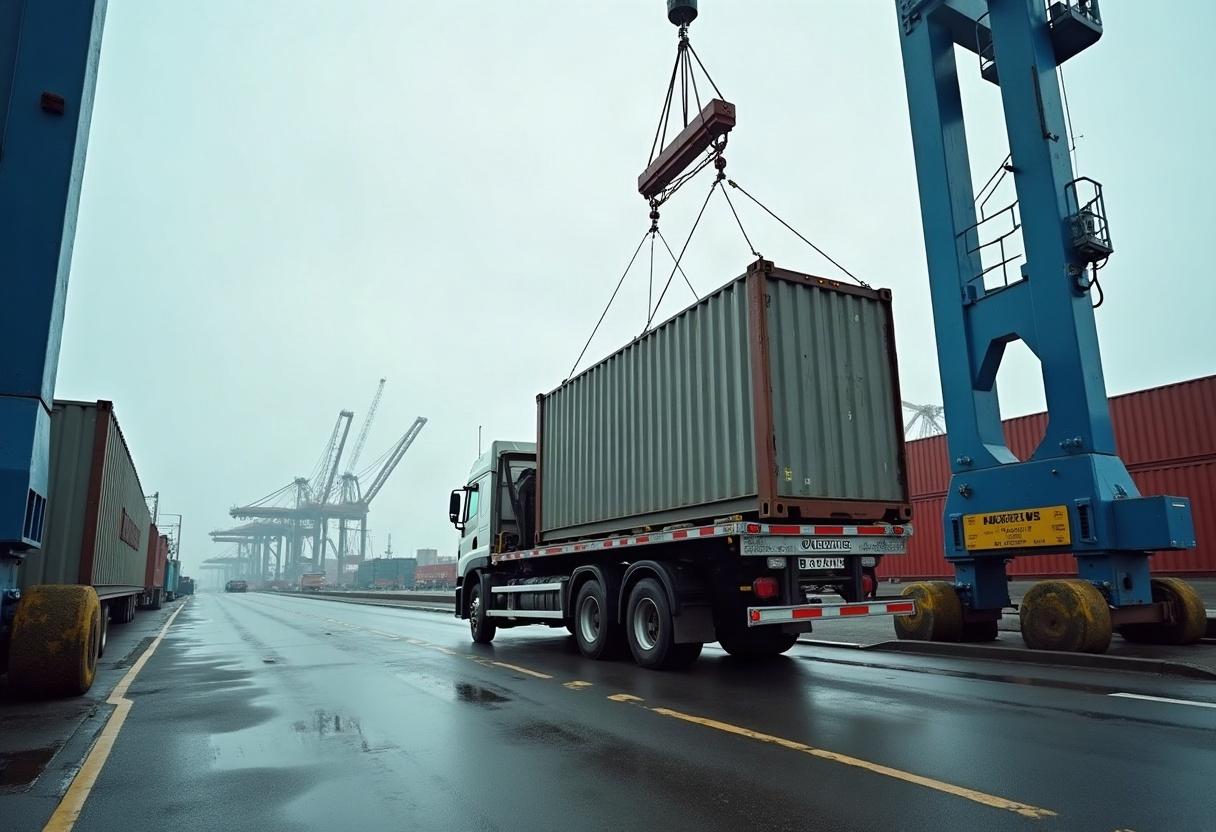
What Bonded Trucking Means for Importers
When a container arrives at the Port of Seattle or Port of Tacoma, it sits at the terminal under a ticking clock. Terminal storage is free for a limited window — typically 4 to 7 days — and after that, demurrage fees start accruing daily. If the cargo has not cleared U.S. Customs by the time the free window expires, you have two choices: pay the demurrage or get the container off the terminal under bond.
That second option is bonded trucking. A customs bonded carrier can move not-yet-cleared cargo off the terminal under a CBP bond, delivering it to a bonded warehouse or designated facility where it waits for clearance without burning demurrage at the port. All Season Transport is a customs bonded carrier based at 22408 76th Ave S in Kent, WA, with the fleet and authority to move in-bond cargo from Seattle and Tacoma terminals.
How Bonded Trucking Works
The In-Bond Process
When a container arrives at a Pacific Northwest terminal and the importer or broker cannot complete customs clearance in time, the in-bond process kicks in:
- In-bond documentation — The broker files the appropriate in-bond entry with CBP, designating the bonded warehouse or facility where the cargo will move.
- Carrier authorization — A customs bonded carrier like All Season Transport is dispatched to the terminal with the in-bond paperwork.
- Terminal pickup — The driver presents the in-bond documentation at the terminal gate, picks up the container, and moves it under bond.
- Delivery to bonded facility — The container is delivered to the designated bonded warehouse, where it remains under bond until customs clearance is complete.
Throughout the move, the cargo stays under the customs bond. It is not released for domestic distribution until CBP clears it.
Why Importers Need a Bonded Carrier
A standard drayage carrier without a customs bond cannot move cargo off the terminal if it has not cleared customs. The terminal will not release the container. This is where bonded trucking becomes essential:
- Demurrage avoidance — Moving cargo to a bonded warehouse stops the demurrage clock at the terminal while clearance is pending.
- Cargo that needs further processing — Some cargo requires inspection, fumigation, or relabeling at a bonded facility before it can be released.
- Transit to another port — In-bond cargo can be moved from Seattle or Tacoma to another port for export, moving under bond through the entire transit.
All Season Transport's customs bonded authority means it can handle any of these scenarios directly, without coordinating a separate bonded carrier.
The Advantage of an Asset-Based Bonded Carrier
All Season Transport is not a freight broker. It is an asset-based carrier that owns its trucks and chassis — 60 company-owned power units and 200 private chassis — operating from a single facility in Kent, WA. For bonded trucking, that asset ownership matters in three specific ways:
Capacity You Can Count On
During peak import season — August through October — terminal congestion peaks and drayage capacity tightens. Brokers scramble for trucks; asset-based carriers deploy their own fleet. When an in-bond container needs to move off the terminal before demurrage hits, capacity is the difference between a few hundred dollars in trucking and several thousand in terminal storage.
Equipment Control
In-bond moves require the right chassis for the container size. All Season Transport's 200 private chassis inventory means the correct equipment is available without waiting on a pool or a third-party provider. Standard 20-foot, 40-foot, 40-foot high cube, and 45-foot containers are all within the fleet's handling range.
Single-Point Accountability
One carrier picks up the container, moves it under bond, and delivers it to the bonded facility. No handoffs, no broker coordination, no lost documentation between parties. Our container drayage service handles the full drayage scope, and our customs bonded status extends that capability to in-bond cargo.
Bonded Trucking vs. Standard Drayage
Standard drayage moves cleared cargo from the terminal to a warehouse. Bonded trucking moves uncleared cargo under a customs bond. The trucks and chassis are the same, but the authority and documentation are different:
| | Standard Drayage | Bonded Trucking | |---|---|---| | Cargo status | Customs cleared | Not yet cleared | | CBP bond required | No | Yes | | Terminal release | Routine | Requires in-bond docs | | Destination | Any warehouse | Bonded warehouse or designated facility | | Carrier requirement | Standard MC authority | Customs bonded carrier |
If your cargo has cleared customs, standard drayage services handle the move. If it has not, bonded trucking is the only option — and it requires a carrier with the right authority.
Common Bonded Trucking Scenarios at Seattle and Tacoma
Peak Season Demurrage Pressure
During peak import season, customs processing times can stretch. A container that arrives on a Friday may not clear until the following Wednesday if the entry is flagged for review. Bonded trucking gets that container off the terminal on Monday, stopping the demurrage clock and moving the cargo to a bonded warehouse where it waits for clearance without daily storage fees.
Cargo Requiring Inspection
CBP may hold cargo for agriculture inspection, FDA review, or trade compliance verification. Rather than leaving the container at the terminal under escalating demurrage, a bonded carrier moves it to a bonded facility where the inspection can take place off-port.
In-Bond Transit
Some import cargo enters the U.S. in-bond for transit to another port or a bonded warehouse in a different state. All Season Transport's interstate operating authority (WA, OR, MT, ID, CA) allows in-bond moves beyond the immediate Seattle-Tacoma corridor.
Getting a Bonded Trucking Quote
For bonded trucking from the Port of Seattle or Port of Tacoma, call (253) 893-8864 or email info@allseasontransport.com. Have the following ready:
- Container number and size
- Terminal location (Seattle or Tacoma)
- In-bond entry number
- Destination bonded warehouse or facility address
- Pickup timeline
All Season Transport operates 24/7 dispatch from its Kent, WA facility. For more on our drayage and intermodal capabilities, see our intermodal logistics guide or our transloading services.
FAQ
- What is bonded trucking?
- Bonded trucking is the transport of imported cargo that has not yet cleared U.S. Customs, moving under a customs bond from a port terminal to a bonded warehouse or another designated location. A customs bonded carrier like All Season Transport holds a CBP bond that allows it to move in-bond cargo off the terminal without the cargo first being cleared by customs.
- When do I need a bonded trucking carrier?
- You need a bonded carrier when your import cargo has not cleared customs but needs to move off the terminal — typically because the container is being moved to a bonded warehouse for further processing, or because demurrage is accruing and the cargo needs to be moved before clearance paperwork is complete. Without a bonded carrier, the container cannot leave the terminal until customs releases it.
- How does bonded trucking work at the Port of Seattle and Port of Tacoma?
- All Season Transport dispatches a truck with the correct chassis to the terminal, presents the in-bond documentation at the gate, picks up the container, and moves it to the designated bonded warehouse or receiving facility. The cargo remains under bond throughout the move. This process is common at both Seattle and Tacoma terminals during peak import season.
- What equipment does All Season Transport have for bonded trucking?
- All Season Transport operates 60 company-owned trucks and 200 private chassis from its facility at 22408 76th Ave S in Kent, WA. The company is a customs bonded (in-bond) carrier, which means it can move not-yet-cleared import cargo under bond directly off the terminal without waiting for customs clearance.