
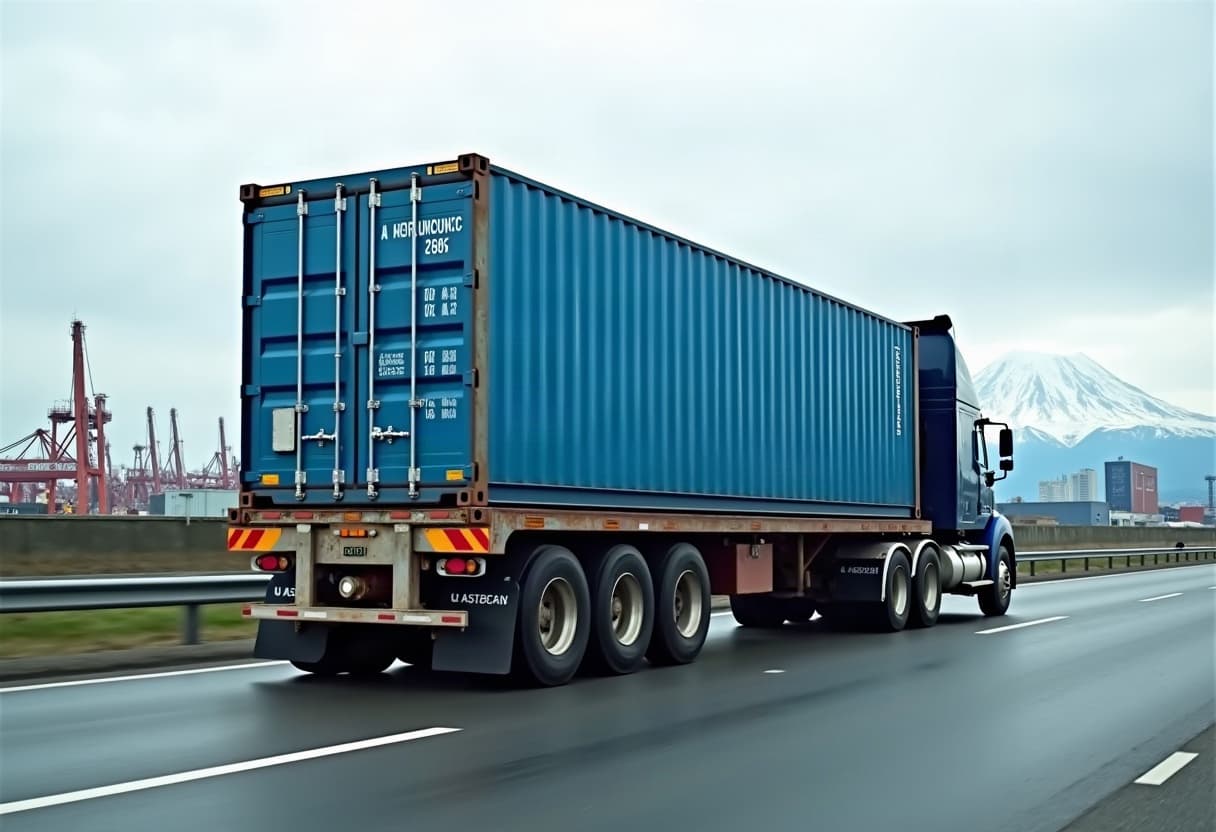
Container Transport Near Me: How to Choose a Kent, WA Provider
When you search "container transport near me" from Kent, Auburn, Sumner, or anywhere in the Puget Sound industrial corridor, you are looking for a truck and chassis that can move a shipping container from the port, rail ramp, or distribution center to your warehouse or receiver — without delays, broker markups, or chassis shortages. Container transport is the critical first and last mile of the import and export supply chain, and in the Pacific Northwest, it is dominated by drayage moves from the Ports of Seattle and Tacoma.
This guide explains what container transport includes, how drayage works in the Kent Valley, what it costs, and what to look for when choosing a local provider.
What container transport actually means
Container transport covers the movement of standardized shipping containers — 20-foot, 40-foot, 40-foot high-cube, and occasionally 45-foot or 53-foot domestic containers — from one point to another. In the Pacific Northwest, the most common container transport scenarios are:
- Port drayage — moving import containers from the Port of Seattle or Port of Tacoma to a nearby warehouse for devanning
- Export drayage — moving loaded containers from a warehouse or manufacturer to the port for export
- Rail drayage — moving containers between a rail ramp (like the BNSF or UP intermodal yards) and a local warehouse
- Inland container hauls — longer-distance moves of containerized freight to destinations across Washington, Oregon, and beyond
For a detailed explanation of the port-to-warehouse move specifically, see our container drayage guide.
How drayage works in the Kent Valley
The Kent Valley — the industrial corridor along I-5 between Seattle and Tacoma — is the primary drayage market in the Pacific Northwest. Kent sits 18 miles south of the Port of Seattle and 12 miles north of the Port of Tacoma, making it the natural warehousing and distribution hub for importers moving containers through either port.
A typical import drayage flow looks like this:
- Container arrives at port — discharged from a vessel and staged in the terminal
- Carrier dispatches truck and chassis — the drayage carrier sends a truck with a chassis to the terminal
- Container picked up — the trucker collects the container from the port, clears through the terminal gate
- Container delivered to warehouse — the container is driven to a warehouse in Kent, Sumner, Auburn, or Tukwila for devanning
- Empty container returned — the empty container is returned to the port or a designated depot
The entire cycle — port pickup, delivery, and empty return — typically takes one to two days, depending on terminal congestion, appointment availability, and warehouse receiving hours. For an overview of drayage service providers, see our drayage companies guide.
Container transport costs in the Pacific Northwest
Container drayage rates in the Kent Valley and Puget Sound region typically fall in these ranges:
| Move Type | Rate Range | Notes | |-----------|-----------|-------| | Port-to-warehouse drayage (import) | $250–$450/container | Under 50 miles, Kent Valley to port | | Warehouse-to-port drayage (export) | $250–$450/container | Reverse move, similar distance | | Inland container haul | $4–$8/loaded mile | Longer distances beyond the metro area | | Chassis fee | $15–$35/day | If chassis is not owned by the carrier | | Fuel surcharge | 10–15% of base rate | Fluctuates with diesel prices | | Detention/demurrage | $75–$150/day | Port or terminal storage fees if container is not picked up on time |
Factors that affect pricing:
- Distance — port-to-warehouse moves under 50 miles are usually flat-rate; longer hauls are per-mile
- Container size — 40-foot containers cost slightly more than 20-foot due to chassis and weight
- Chassis availability — chassis shortages during peak season can add fees or delays
- Terminal congestion — port appointments and gate hours affect turnaround time
- Weight and hazmat — overweight containers or hazardous cargo require special permits and equipment
For local freight rate context in the Kent area, see our freight hauling Kent WA guide.
What to look for in a container transport provider near Kent, WA
Asset-based vs. brokered
The single most important distinction is whether the provider owns their trucks and chassis or brokers the move to a third party. An asset-based carrier has its own trucks, drivers, and chassis — meaning guaranteed capacity, direct accountability, and no broker markup. A broker finds a truck from a third party, which means less control over timing, driver quality, and equipment availability.
During peak import season — when chassis are scarce and port congestion is high — an asset-based carrier with its own chassis fleet is the difference between your container being picked up on time and sitting in the terminal accumulating demurrage. Learn why this matters in our asset-based vs. broker guide.
Private chassis fleet
Chassis availability is one of the biggest bottlenecks in port drayage. A carrier that owns its own chassis does not depend on the port's chassis pool, which means faster pickup times and fewer delays. Ask how many chassis the carrier owns and whether they have the right sizes (20-foot, 40-foot, 40-foot high-cube) for your containers.
Customs-bonded authority
If you are moving import containers that have not yet cleared customs, your carrier needs customs-bonded authority. This allows the carrier to move in-bond cargo from the port to a bonded warehouse or Container Freight Station. Not all drayage carriers have this authority — verify before booking.
Proximity to the ports
A carrier based in the Kent Valley has a geographic advantage for port drayage. A truck that has to deadhead (drive empty) 50 miles to reach the port terminal will charge for that time and take longer to complete the move. Kent-based carriers can typically have a truck at the port terminal within 1–2 hours of dispatch.
Experience with port terminals
Each port terminal has its own appointment system, gate hours, and procedures. A carrier that runs the Ports of Seattle and Tacoma daily knows which terminals have morning vs. afternoon gates, how to navigate the appointment systems, and how to avoid unnecessary waiting time. For more on drayage services in the region, see our drayage services Seattle Tacoma guide.
Why Kent, WA is a container transport hub
Kent, WA sits at the intersection of I-5 and SR-167, directly between the Port of Seattle (18 miles north) and the Port of Tacoma (12 miles south). The Kent Valley industrial corridor — running through Kent, Auburn, Sumner, and Tukwila — is the densest concentration of warehousing, distribution, and manufacturing in the Pacific Northwest.
This concentration means:
- Short drayage distances from both ports to warehouse facilities
- Dense carrier network — multiple trucking companies competing for freight
- Fast dispatch — a Kent-based carrier can typically have a truck at the port terminal within 1–2 hours
For local transport services in Kent, see our transport services Kent WA guide.
All Season Transport: asset-based container transport from Kent, WA
All Season Transport operates a 60-truck asset-based fleet with 200 private chassis from 22408 76th Ave S, Suite 200, Kent, WA 98032 — the same address as our sister warehousing operation, All Season Warehouse. Our services include:
- Port drayage — customs-bonded container transport from the Ports of Seattle and Tacoma
- Rail drayage — container moves from intermodal rail ramps to local warehouses
- Inland container hauls — longer-distance transport of containerized freight across the Pacific Northwest
- Transloading — container-to-truck and truck-to-warehouse transfers
With 60 company-owned trucks and 200 private chassis, we provide guaranteed capacity without relying on brokers or the port chassis pool. Our fleet handles container moves from the Ports of Seattle and Tacoma to destinations throughout Washington, Oregon, and beyond. For an overview of our freight capabilities, see our freight carrier guide.
Contact us at (253) 246-2125 or info@allseasontransport.com to book a container transport move, or explore our drayage services for the full scope of what we move.
Bottom line
When you search "container transport near me" from Kent, WA, you want a local, asset-based carrier that owns its trucks and chassis, has customs-bonded authority, knows the port terminals, and can pick up your container on time without broker delays. The right provider guarantees capacity during peak season, navigates port procedures efficiently, and gets your container from the port to your warehouse without demurrage or detention fees. In the Kent Valley, that combination of proximity, equipment, and experience is what separates a reliable drayage carrier from a load board gamble.
FAQ
- What is container transport?
- Container transport is the movement of shipping containers — typically 20-foot or 40-foot ocean or domestic containers — from a port, rail ramp, or distribution center to a warehouse, receiver, or final destination. In the Pacific Northwest, it most commonly refers to drayage: moving containers from the Ports of Seattle and Tacoma to nearby warehousing or distribution facilities.
- How much does container transport cost in the Kent, WA area?
- Container drayage rates in the Kent Valley typically range from $250 to $450 per container for port-to-warehouse moves under 50 miles, depending on container size, weight, chassis availability, and whether the move is import or export. Longer hauls to Seattle, Tacoma, or regional destinations are priced per mile, typically $4–$8 per loaded mile.
- What is the difference between container transport and drayage?
- Drayage is a specific type of container transport — the short-distance move of a container from a port or rail terminal to a nearby warehouse or receiver, usually within the same metro area. Container transport is the broader term that includes drayage plus longer inland hauls moving containerized freight to destinations across the region or state.
- Does All Season Transport offer container transport near Kent, WA?
- Yes. All Season Transport operates a 60-truck asset-based fleet with 200 private chassis from 22408 76th Ave S, Suite 200, Kent, WA 98032, providing port drayage and container transport from the Ports of Seattle and Tacoma to warehouses and distribution centers throughout the Pacific Northwest.